All ChatGPT Models Explained in 2026: GPT-5.6, GPT-6 & More
Explore all ChatGPT models explained in 2026, including GPT-5.6, GPT-6, GPT-5.5, GPT-5.4, GPT-4o and more. Learn the differences, features, and use cases.
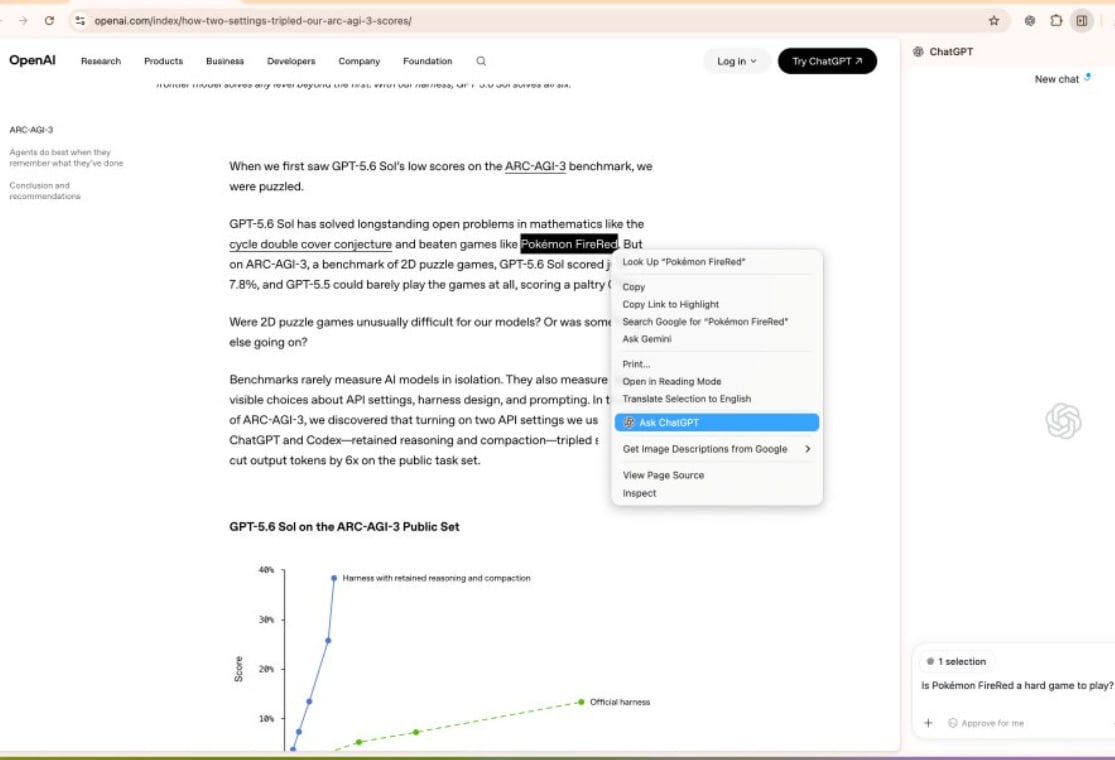
ChatGPT is not powered by only one AI model. OpenAI uses different models for fast everyday conversations, deep reasoning, coding, research, image understanding, and complex professional work.
The model options you see can depend on your ChatGPT plan, region, workspace settings, and rollout status. Some models are selected automatically, while paid users may have more options in the model picker.
This guide explains the major current ChatGPT model families in simple language and helps you choose the right one.
What Is a ChatGPT Model?
A ChatGPT model is the AI engine that understands your prompt and generates a response.
Different models are built for different needs:
Fast models answer quickly for normal chat, writing, and daily work.
Thinking models spend more time reasoning through difficult problems.
Mini models are lighter and faster for high-volume tasks.
Coding models are optimized for software development.
Older models may disappear from ChatGPT as newer models replace them.
The best model is not always the most powerful one. For example, a quick email does not need deep reasoning, but debugging a difficult production error may benefit from a thinking or coding model.
Quick Comparison of ChatGPT Models
ChatGPT model | Model type | Best for | Response speed | Reasoning depth | Main strengths | When not to use it | Availability |
GPT-5.6 Sol | Flagship reasoning model | Complex coding, research, science, cybersecurity, design, and professional work | Moderate | Very high | Handles difficult multi-step tasks, large technical problems, detailed research, and advanced software work | Simple emails, short questions, or tasks where speed matters most | Eligible paid plans; availability may vary |
GPT-5.5 Instant | Fast general-purpose model | Everyday chat, writing, learning, summaries, emails, and quick help | Very fast | Medium | Natural conversation, practical answers, clear writing, and fast responses | Very complex analysis, deep debugging, or high-stakes research | Depends on plan and rollout |
GPT-5.4 Thinking | Advanced reasoning model | Planning, detailed analysis, research, debugging, technical architecture, and long tasks | Moderate | High | Thinks more carefully, maintains context well, and gives structured answers for complex work | Quick or simple tasks that need an immediate reply | Available on supported plans |
GPT-5.4 Pro | Premium deep-reasoning model | Important technical, business, scientific, or strategic work | Slower | Very high | More thorough reasoning for difficult problems where accuracy matters more than speed | Casual chat, simple writing, or quick brainstorming | Usually limited to higher paid plans |
GPT-5.4 mini | Lightweight reasoning model | Short technical questions, logic, coding help, and efficient analysis | Fast | Medium | Good balance of speed, reasoning, and usage efficiency | Large project planning or highly complex research | Often used as a fallback model |
GPT-5.3 Instant | Fast conversational model | General questions, writing, SEO work, summaries, and web-assisted answers | Very fast | Medium | Helpful tone, practical responses, and strong everyday usability | Complex multi-step reasoning or advanced coding tasks | Depends on plan and rollout |
GPT-5.3-Codex | Agentic coding model | Building apps, debugging, code review, refactoring, testing, and repository-level work | Moderate | High | Strong code generation, debugging, engineering reasoning, and multi-file development | Non-technical daily chat or simple content writing | Primarily available in Codex coding surfaces |
GPT-5-Codex-Mini | Efficient coding model | Small code changes, UI fixes, API endpoints, tests, and code explanations | Fast | Medium | Lower-cost and faster coding support for routine development work | Difficult architecture decisions or large codebase work | Available in supported Codex tools |
Simple Model Selection Guide
If you want to…Best model to choose | |
Write an email, caption, or simple blog content | GPT-5.5 Instant |
Ask normal questions or learn a topic quickly | GPT-5.5 Instant or GPT-5.3 Instant |
Create an SEO roadmap or detailed article outline | GPT-5.4 Thinking |
Analyze a difficult business or technical problem | GPT-5.4 Thinking or GPT-5.4 Pro |
Research a complex topic deeply | GPT-5.6 Sol |
Build a complete full-stack project | GPT-5.6 Sol or GPT-5.3-Codex |
Fix a small React, JavaScript, or CSS bug | GPT-5-Codex-Mini |
Review, refactor, or debug a large codebase | GPT-5.3-Codex |
Solve complex math, logic, or science questions | GPT-5.4 Thinking, GPT-5.4 Pro, or GPT-5.6 Sol |
1. GPT-5.6 Sol: Best for Complex Work
GPT-5.6 Sol is OpenAI’s flagship reasoning model for demanding work. It is designed for users who need strong performance in coding, research, science, cybersecurity, computer use, and design.
Use GPT-5.6 Sol when you need help with:
Building a complete web application
Debugging difficult backend or deployment issues
Understanding a large codebase
Researching a technical topic deeply
Creating complex plans, documents, or business analysis
Solving multi-step reasoning problems
For example, if you ask ChatGPT to analyze a server issue involving Nginx, PM2, MongoDB, and environment variables, GPT-5.6 Sol is a better choice than a fast model.
It may take longer to respond because it is designed to reason more carefully.
2. GPT-5.5 Instant: Best for Everyday Chat
GPT-5.5 Instant is made for fast, natural, and practical conversations. It is a strong choice for normal daily tasks where you want a useful answer quickly.
Use GPT-5.5 Instant for:
Writing emails and messages
Creating social-media captions
Explaining concepts in simple language
Brainstorming blog topics
Summarizing content
Asking general questions
Improving grammar and writing
This type of task does not need a long reasoning process. GPT-5.5 Instant can provide a clear answer quickly.
3. GPT-5.4 Thinking: Best for Deep Analysis
GPT-5.4 Thinking is designed for tasks that require deeper reasoning, planning, research, coding, and multi-step problem solving.
It is useful when a quick answer may miss important details.
Use GPT-5.4 Thinking for:
Comparing technical solutions
Planning an application architecture
Debugging complex bugs
Analyzing spreadsheets or reports
Creating a detailed SEO roadmap
Researching a difficult question
Writing detailed project specifications
4. GPT-5.4 Pro: Best for High-Importance Tasks
GPT-5.4 Pro is for users who need more careful and thorough reasoning on demanding tasks. It can take longer than standard thinking models, but the extra time can be worthwhile for complex work.
Use GPT-5.4 Pro for:
Important production decisions
Large software architecture planning
Advanced mathematical or scientific problems
Complex security reviews
Detailed business strategy
High-quality research and analysis
You should still verify important legal, medical, financial, and security-related answers with qualified professionals or trusted sources.
5. GPT-5.4 Mini: Efficient Reasoning Model
GPT-5.4 mini is a smaller reasoning model. It is designed to give efficient reasoning support when a full frontier model is not necessary or when usage limits apply.
Use GPT-5.4 mini for:
Short coding questions
Basic technical troubleshooting
Math and logic questions
Structured summaries
Quick analysis tasks
High-volume AI workflows
A mini model may be less powerful than a larger thinking model, but it is still useful for many everyday technical tasks.
6. GPT-5.3 Instant: Fast and Helpful General AI
GPT-5.3 Instant is a general-purpose model focused on better everyday responses. It is useful for conversation, writing, practical advice, and web-assisted answers.
Use GPT-5.3 Instant for:
General questions
Writing and rewriting
Product descriptions
Blog outlines
SEO titles and meta descriptions
Learning concepts
Quick problem solving
This is a good option when you want ChatGPT to feel fast, conversational, and helpful without waiting for extended reasoning.
7. GPT-5.3-Codex: Best for Serious Coding
GPT-5.3-Codex is designed for agentic software engineering. It combines code generation, reasoning, debugging, and the ability to work through larger development tasks.
Use GPT-5.3-Codex for:
Creating full-stack applications
Refactoring existing code
Fixing build errors
Writing tests
Reviewing pull requests
Understanding repositories
Debugging deployment problems
Making changes across multiple files
Codex models are especially helpful in coding-focused environments such as Codex, IDE extensions, CLI tools, and code-review workflows. Availability can differ from the normal ChatGPT model picker.
8. GPT-5-Codex-Mini: More Efficient Coding
GPT-5-Codex-Mini is a lighter coding model. It is useful when you want coding help while using fewer resources or when you need more usage capacity.
Use it for:
Small React component changes
JavaScript bug fixes
Writing API endpoints
Creating unit tests
Explaining code
Basic code reviews
HTML, CSS, and Tailwind updates
For small tasks, GPT-5-Codex-Mini can be faster and more efficient than a larger coding model.
Which ChatGPT Model Should You Choose?
Use this simple guide:
Your task | Recommended model |
|---|---|
Ask a normal question | GPT-5.5 Instant or GPT-5.3 Instant |
Write an email, blog intro, or caption | GPT-5.5 Instant |
Create a detailed blog or SEO strategy | GPT-5.4 Thinking |
Solve a difficult technical problem | GPT-5.4 Thinking or GPT-5.6 Sol |
Build or debug a large application | GPT-5.6 Sol or GPT-5.3-Codex |
Make a small code change | GPT-5-Codex-Mini |
Perform detailed research | GPT-5.6 Sol |
Do complex planning or analysis | GPT-5.4 Pro |
What Happened to GPT-4o, GPT-4.1, o3, and o4-mini?
Many people still search for GPT-4o, GPT-4.1, o3, and o4-mini. These were important OpenAI models, but model availability changes over time.
OpenAI has retired several older models from the ChatGPT product as newer GPT-5 models became available. However, a model being removed from ChatGPT does not always mean it is removed from every OpenAI API or developer product.
GPT-4o
GPT-4o was known for fast multimodal AI features, including text, images, and voice. It was widely used in ChatGPT before newer GPT-5 models replaced it in ChatGPT.
GPT-4.1 and GPT-4.1 Mini
GPT-4.1 was particularly popular for coding and instruction-following. GPT-4.1 mini was its smaller, faster version. They were later retired from ChatGPT as newer models became available.
OpenAI o3
OpenAI o3 was a reasoning model built for difficult coding, math, science, and analytical tasks. It was strong at solving problems that needed careful multi-step thinking.
OpenAI o4-mini
o4-mini was a smaller and more efficient reasoning model. It was useful for coding, math, visual analysis, and higher-volume tasks.
These models are important in ChatGPT’s history, but users should choose from the options currently available in their own model picker.
Important: ChatGPT Models and API Models Are Not Always the Same
ChatGPT and the OpenAI API do not always show the same models.
A model may be:
Available in ChatGPT but not the API
Available in the API but not ChatGPT
Available only in Codex or developer tools
Available only on paid plans
Available only for Team, Enterprise, or Edu workspaces
Temporarily unavailable during a rollout
Always check the model picker in ChatGPT or the official OpenAI documentation for the latest availability.
Bottom Line
ChatGPT models are becoming more specialized. Fast models help with everyday work, thinking models handle deeper analysis, and Codex models support software development.
For most people, GPT-5.5 Instant is a great default for everyday tasks. If your work involves detailed planning, complex research, advanced coding, or difficult technical problems, use GPT-5.4 Thinking, GPT-5.4 Pro, or GPT-5.6 Sol when available.
The best way to choose a model is simple: use a fast model for quick work and a reasoning model when accuracy, depth, and careful thinking matter more