Claude Fable 5.1 and Claude Mythos 5.1: New AI Models for Coding and Knowledge Work
A new generation of Claude AI models has been introduced: Claude Fable 5.1 and Claude Mythos 5.1. Positioned for advanced coding and knowledge-work tasks, these models are designed to help developers, teams, researchers, and businesses work through complex problems more effectively.
What Are Claude Fable 5.1 and Claude Mythos 5.1?
Claude Fable 5.1 and Claude Mythos 5.1 are presented as advanced AI models built for two major areas:
Software development and technical problem-solving
Professional knowledge work, including research, writing, analysis, and planning
They aim to help users move from an idea or question to a more useful result, whether that means generating code, reviewing documentation, summarizing research, creating reports, or organizing a project plan.
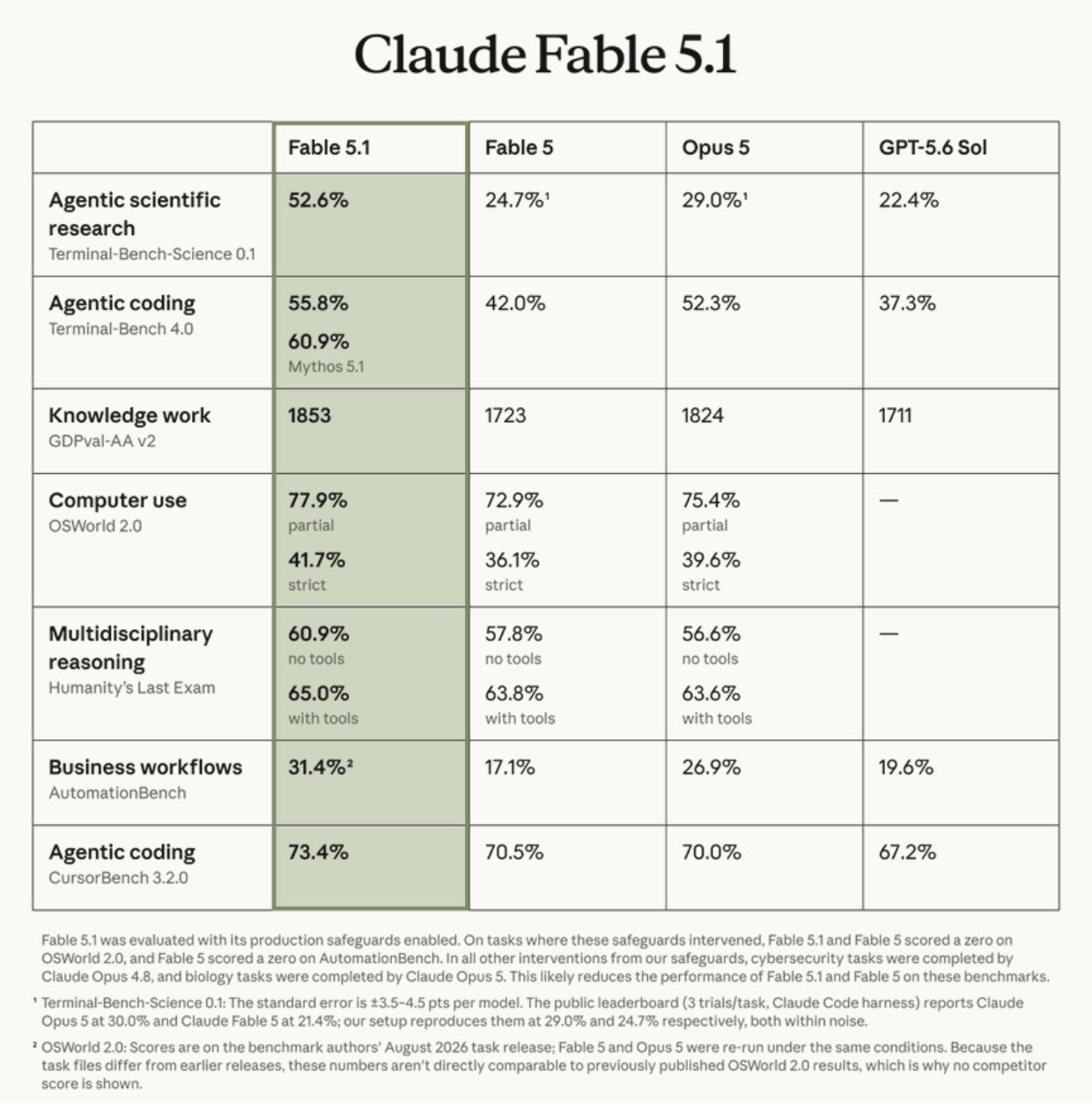
Built for Advanced Coding Tasks
Coding has become one of the most important use cases for AI assistants. Developers often need help understanding existing codebases, fixing errors, writing tests, improving performance, and documenting APIs.
Claude Fable 5.1 and Claude Mythos 5.1 may be useful for workflows such as:
Writing frontend and backend code
Explaining unfamiliar code
Debugging errors and suggesting fixes
Creating unit tests and test cases
Refactoring repetitive or outdated code
Generating API documentation
Converting requirements into technical plans
Reviewing code for readability and maintainability
For developers, the value is not only faster code generation. A capable AI model can also help reduce time spent on repetitive tasks, investigate bugs, and make technical information easier to understand.
Supporting Knowledge Work
Knowledge work includes tasks where people need to read, analyze, write, organize, or make informed decisions. This can include business planning, research, operations, product management, marketing, legal review, and customer support.
Claude Fable 5.1 and Claude Mythos 5.1 are positioned to support work such as:
Summarizing long reports and documents
Creating meeting notes and action items
Drafting emails, proposals, and presentations
Researching topics from provided information
Comparing options and identifying key differences
Building structured plans and checklists
Turning raw notes into clear documentation
This can help teams spend less time formatting information and more time reviewing ideas, making decisions, and completing important work.
Why Better Reasoning Matters
The most useful AI models are not just fast text generators. They need to follow detailed instructions, keep track of context, recognize uncertainty, and provide answers in a clear structure.
For example, a developer may ask an AI assistant to review a large code file, identify security risks, explain the issue in simple language, and suggest a safer implementation. A business team may need to compare several documents and create a short decision brief.
Models designed for advanced reasoning and longer context can make these workflows more practical.
Fable 5.1 vs. Mythos 5.1
While both models are introduced for high-level coding and knowledge work, users should compare their capabilities based on their own tasks. Important factors may include:
Area | What Users Should Evaluate |
|---|---|
Coding quality | Accuracy, debugging ability, test generation, and code understanding |
Reasoning | Ability to solve multi-step problems and follow complex instructions |
Context handling | Performance when working with long documents or large codebases |
Speed | Response time for everyday work |
Reliability | Whether outputs need heavy editing or review |
Cost | Pricing for individual, team, and API usage |
Integrations | Availability in developer tools, business platforms, and workflows |
The best choice will depend on whether a user needs quick coding support, deep document analysis, research assistance, or enterprise-level automation.
AI Still Needs Human Review
Even advanced AI models can make mistakes. They may misunderstand context, provide incomplete answers, or generate code that needs testing before production use.
Businesses and developers should use human review for important work, especially when handling:
Security-sensitive code
Customer data
Financial decisions
Legal content
Medical information
Production deployments
Important business communications
AI can speed up the first draft, research, analysis, or code-writing process, but people remain responsible for checking the final result.
Bottom Line
Claude Fable 5.1 and Claude Mythos 5.1 represent the growing demand for AI that can handle serious coding and knowledge-work tasks. For developers, they may help with coding, debugging, testing, and documentation. For teams, they may support research, planning, analysis, and content creation.
As AI models become more capable, the real advantage will come from using them in practical workflows with clear goals, reliable review processes, and human judgment.